



Dear Miss Floribunda,
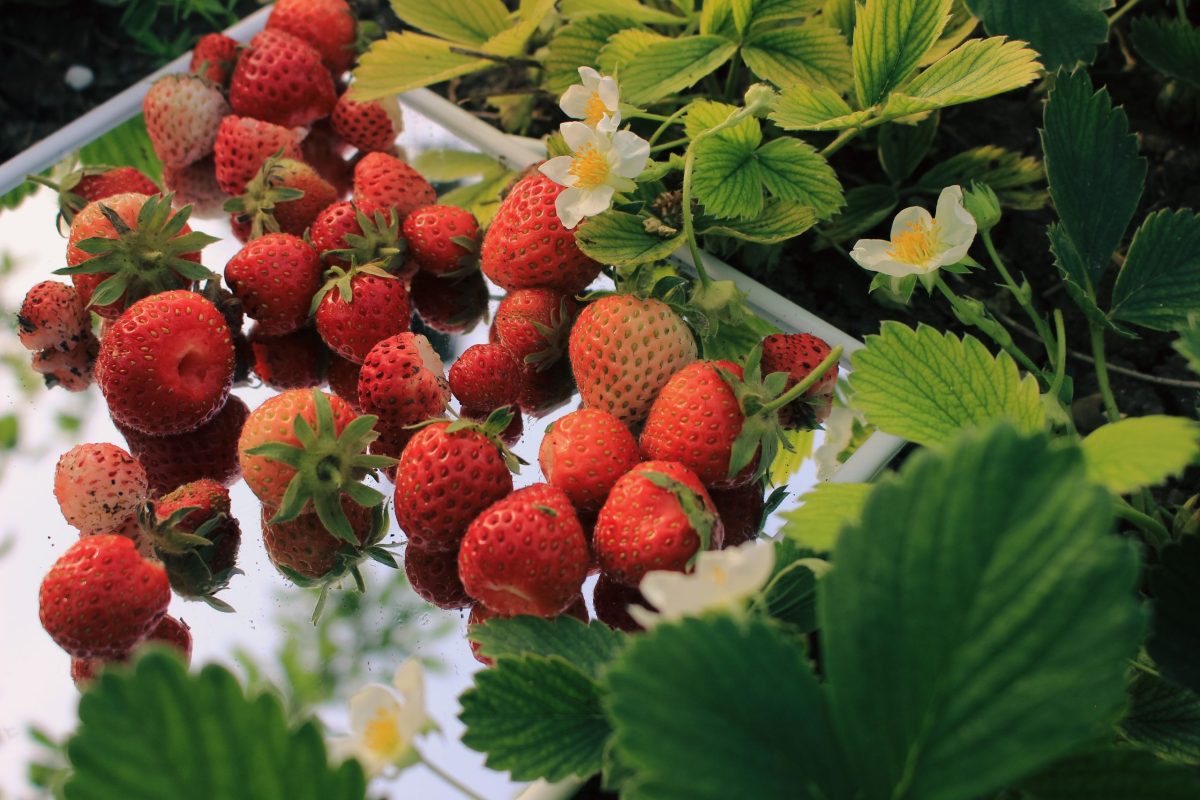
I have been growing strawberries for four years now and have learned from mistakes I made the first year. I learned to water regularly and to add a lot of compost to improve drainage. I learned not to use high nitrogen fertilizer, which gave me mostly leaves, and, instead, found fertilizer high in phosphorus to cause fruiting. Last year, I got an amazing harvest, with so many new plants that I named my growing patch “Strawberry Fields Forever,” after a Beatles’ song my Nana used to sing to me. This year, I was pleased to see even more plants, but they haven’t produced much, and many are tiny and dying.
I have heard that there is a disease going around. Do you know what it is and what it looks like?
Strawberry Fields No Longer on Longfellow Street
Dear Strawberry Fields No Longer,
While there is a dangerous fungal pathogen called Neopestalotiosis (aka Pestalotia or Neo-P) that has been causing concern among professional growers, especially in the south, that pathogen gestates in warm and humid weather, while our spring this year has been relatively dry and cool so far. You would have seen spotting on leaves, and your berries would have rotted if the disease were present.
From your reports of past success, I surmise that you have not been using pesticides that can kill the beneficial insects needed to pollinate the flowers so they can develop into berries. I suspect that you are experiencing the general plant decline so common in June-bearing strawberries.
You appear to have allowed your plants to randomly produce stolons, or runners. Each new plant that develops from the nodes of the stolons will deplete the energy source of the original mother plants, and, in time, all plants become weaker. Also, the resulting overcrowding obstructs light and air flow.
Traditional home garden practice — which goes all the way back to the domestication of wild strawberries by the monks of medieval Europe — is something called selective runner management. You annually select one or two of the most vigorous runners from each mother plant after harvest, and clip off all the others. The chosen runners are pinned to the soil so that they will form nodes that take root and become daughter plants.
In future years, older plants that are becoming woody are removed, and the best runners of selected daughter plants are pinned to the soil so they will take root in turn. (You can order propagation pins, but my Cousin Parsimony tells me that inexpensive hair pins work just fine.) Along with woody plants over five years old, you should remove any of your undersized or unhealthy plants. If you keep on top of this each year, your strawberry field will last indefinitely, if not actually forever.
This selection should be done now for plants that have finished fruiting. Don’t wait till August or September. That is when you add more compost. In October, provide mulch, preferably straw — and, as you can guess, the term “straw” in strawberries probably derives from this practice.
There is yet another potential problem to watch out for each year. The crowns of the previous years’ plants may have become exposed as your soil level sinks, or, if you have added a lot of compost, they may have sunk below soil level. A crown lifted above soil level absorbs less water from its roots and stops producing; a crown sunk below soil level becomes soggy and rots.
I suspect that next year you may want to start from scratch, from new plants. It is also time to practice plant rotation, and put the new plants in a well-prepared new bed. My neighbor Drupe Berrymore suggests mixing in some everbearing strawberry plants, as well. Although they do not produce as heavily as June-bearing plants, they produce consistently during the summer for occasional snacking. They have fewer runners and so are easier to care for; they even do well in pots and hanging baskets.
Drupe suggests that you experiment with our native strawberries, which have small but very flavorful fruit: Fragaria virginiana, which prefers full sun, and Fragaria vesca, which needs some shade. Both of them have runners, which will need to be managed. Now, don’t confuse these white-flowered natives with Potentilla indica, that non-native weed with yellow flowers and tasteless fruit that sometimes invades our gardens. F. virginiana can be bought locally at Chesapeake Natives or ordered online, and Drupe tells me she has ordered F. vesca online, and it has thrived for her.
Although there will be no meeting of the Hyattsville Horticultural Society in June, please check its website for possible field trips or other events: hyattsvillehorticulture.org.