








Hosted jointly by Mexico, Canada and the United States, the FIFA World Cup 2026 has come to North America this month.
Arguably the most popular event on the planet, its competitive narrative covers a lot of ground, with 48 teams in a record 104 matches in 16 cities. Its intensity grows by the day, especially among our immigrant neighbors, not only on the field, but closer to home in the day-to-day lives of nearly one million Prince George’s County residents and the 25% of our population who are foreign born.
Their life-long passion for the game is in full bloom.
Family and Friends Fun Day
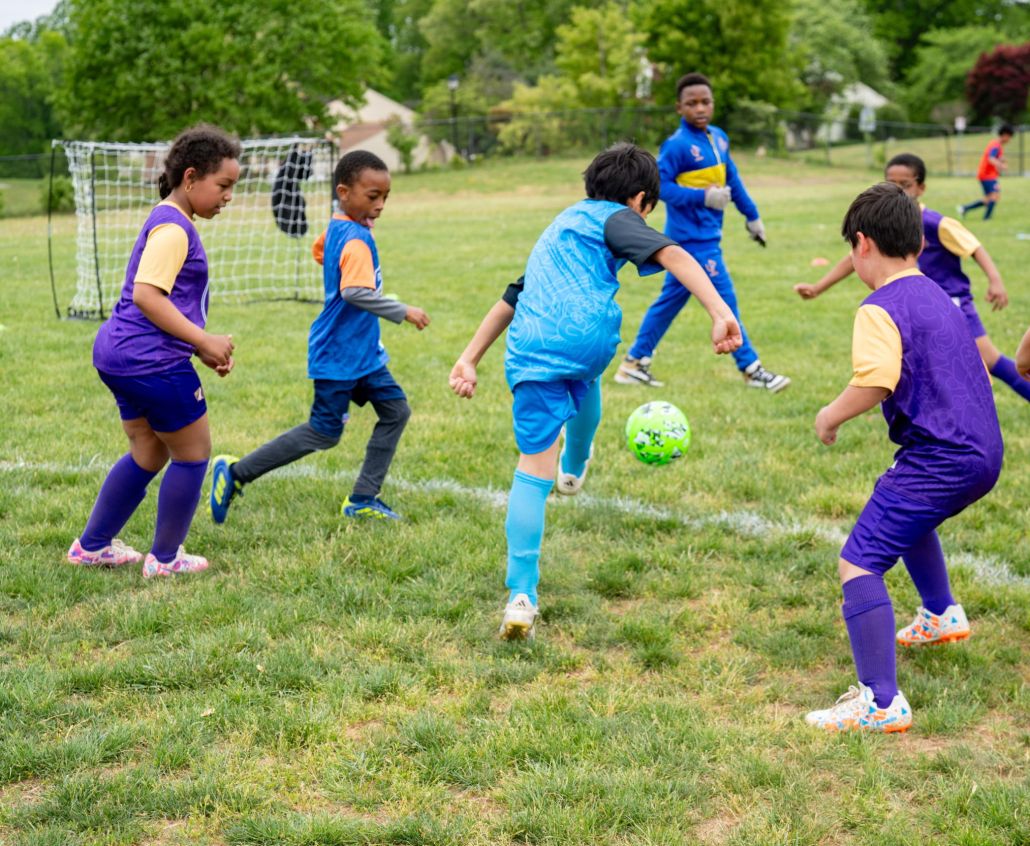
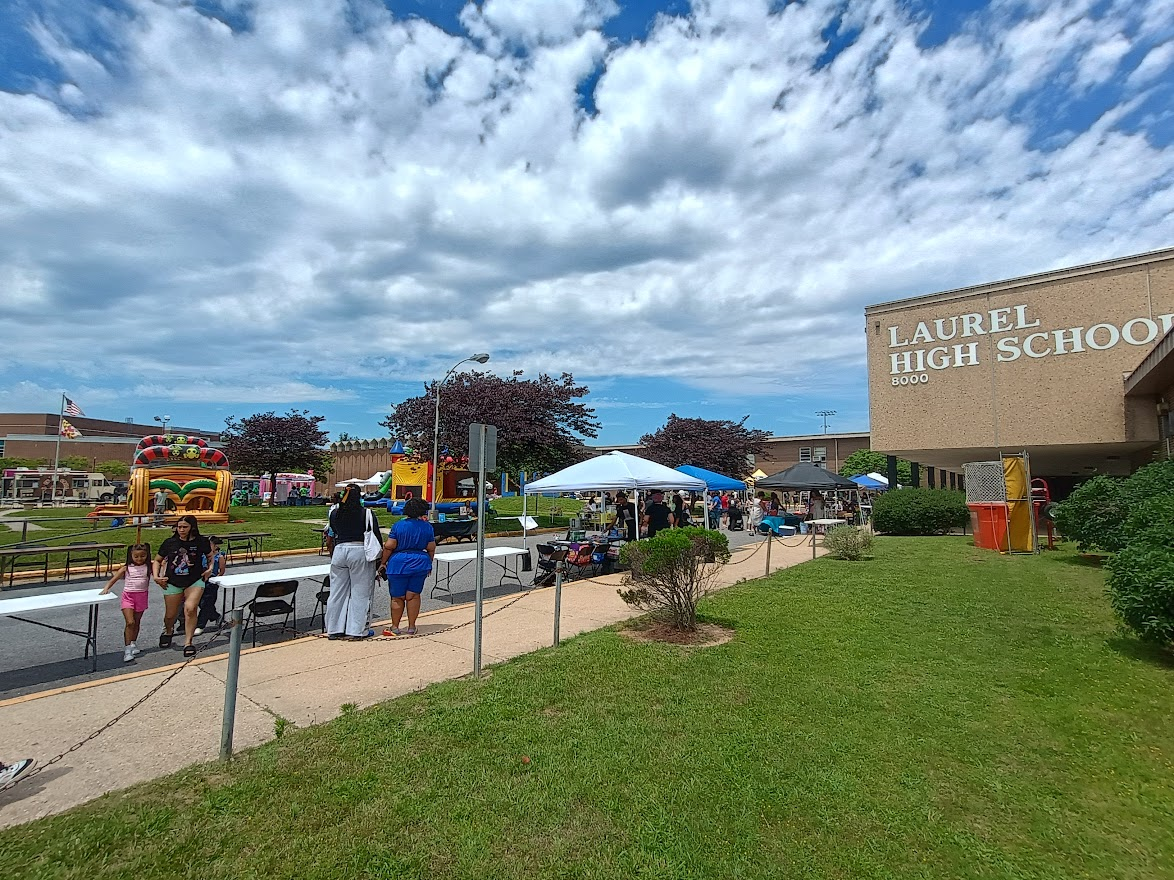
We see that that playing out a few days into the World Cup calendar on a brilliant spring day in the athletic field behind Benjamin Banneker Middle School in Burtonsville. It was the annual Family & Friends Fun Day sponsored by Elite Sports Youth Development Academy [ESYDA], a non-profit soccer club that since 2004 has run year-round clinics for more than 400 players at five sites in Prince George’s and Montgomery counties. While developing talent, ESYDA also works with youth of all ages, abilities and financial backgrounds to promote life skills. According to the ESYDA, 90% of players go on to college.
With DJ music blaring in the background, Justice Sakyi watches his three young sons in the fun matches arranged for the day, where everyone comes out a winner, earning praise and a medal for teamwork. Sakyi was born in Ghana, and immigrated to the United States at age eight. He remembers playing soccer in his mother country, shoeless in the dirt.
“When you are growing up in a space where sometimes things are grim, your parents working to help you out, soccer becomes the one escape route,” he said. “And when you realize that that escape route is not only shared within your small community, but the entire world, it opens your eyes to how important the sport is.”
That World Cup magic ingrained in Sakyi is what he wants to pass on to his kids. He says that learning begins with teamwork. “It’s one of the few sports where your individual skill set [isn’t enough]. You really have to bond with your teammates and gel together to have an impact on the field, to start winning games,” he said.

Sakyi adds that the sport is the connective fiber of community, a core ESYDA value. “You have to understand the people you’re playing with, where they’re from. Some of the kids on my [boys’] teams speak different languages. So, they are all coming from different backgrounds, a mixed soup,” he said.
It’s a melting pot his kids are eager to jump in.
Nine-year-old Justice knows his soccer history. “I want to be the best like Pelé,” he said. “I am working on my fake shot, on my dribbling and shooting, since I am a winger.”
Elijah, age six isn’t yet as technique minded as his older brother. “What I like about soccer is that you make new friends,” he said.
Their father has already enrolled his sons in summer soccer. And they won’t be alone. The sport accounts for over 80,000 youth players at 241 soccer clubs across the state according to the Maryland State Youth Soccer Association.
As World Cup fever heats up, Sakyi watches non-stop. An accountant by day, he says the late hours aren’t a problem. “I think when it comes to the World Cup, it’s an undiscussed sacrifice that needs to be taken to make sure that you catch all your games,” he said.
From Macedonia to University of Maryland head coach
Sasho Cirovski was born in a small village in Macedonia in the former Yugoslavia. “We didn’t really have a soccer ball so we’d find a way to stuff a pig bladder that we made into a soccer ball. I just loved it. It’s all that we could do,” he said.
Coach Cirovski has done much, much more. Immigrating to Windsor, Ontario Canada at age eight, he discovered he had talent for the game that eventually landed him a college scholarship, and professional play for teams in Canada and in the United States.
Today Cirovski heads University of Maryland Men’s Soccer, a position he’s held for 33 years. He is credited with transforming Maryland into a national soccer powerhouse, leading the team to three NCAA championships and 17 Big Ten and ACC titles.
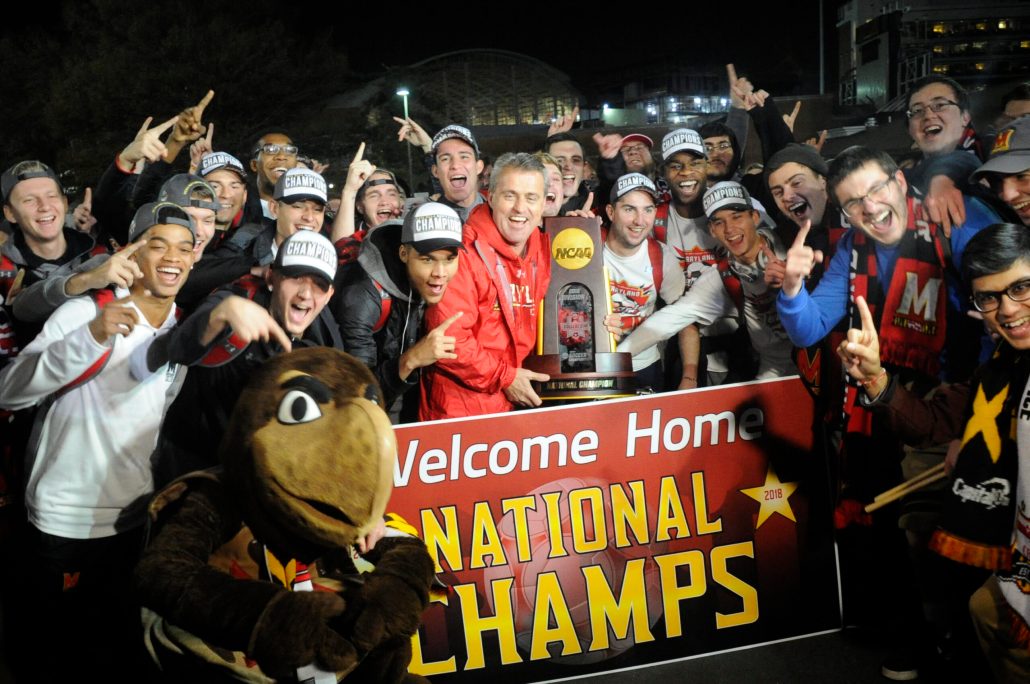
Cirovski says his career has been bolstered by the growth of the sport in the United States. He watched as the United States first hosted the World Cup in 1994, and says the sport got an incredible boost when women won the World Cup in 1991, 1999, 2015, and 2019. “Now we have 103 professional men’s teams and 20 professional women’s teams. We had none of that back when I was trying to become a professional player,” he said.
Another source of pride for Cirovski is that Maryland players have been in every World Cup since 2010, and 84 have joined professional teams. During the 2026 World Cup, he will have his eyes on former Maryland goalkeeper Dayne St. Clair who is on the roster for Team Canada.
Cirovski explains his love for the game as a shared joy. He says he will be attending some World Cup games, but will spend most of his screen time on his backyard patio with friends and family.
“You see a commonality of spirit, a love for a sport, a love for a country, but also a respect for the opposition. [The] World Cup can teach us that we are more alike than we are different, no matter where we live, or what we do, that we should celebrate our humanity,” he said. “It’s great to have a sport that brings us together, he said.
Politics of the moment
Cirovski says he was disappointed when a Somali World Cup referee was denied entry to the United States. “We are a country that was built by immigrants,” he said. “I think we should be opening our arms to the world. [The World Cup] is an opportunity to show our best selves.”
Back at the playing field at Benjamin Banneker Middle School, coach Daniela Mata, 17, expresses the same sentiment. “I feel [the politics] somehow distracts from the beauty of the sport.” She works to counter that as a first-generation Salvadoran American, with soccer as her anchor and guiding light. Coaching soccer “has given me a lot of confidence.” She says she tries to point her four-to-six-year-old charges in the right direction on the field and in life.
Mata is headed to the University of Maryland on scholarship.
Nearby is Brian Galbraith, principal of Cherokee Lane Elementary School in Prince Georges County, whose student population is 95% Hispanic. He says as a 6’3” white guy, his presence can be intimidating, but he’s here to back Cherokee Lane kids on the field, and like in school, honors their immigration experience with empathy.
So, with immigration fears heightened because of federal deportation policies, Galbraith is on guard. “I’ll do whatever I can to make sure that not only my students, but my families stay safe,” he said.
He says soccer ties their world together, and binds them with his own. “It’s an easy entry point, a kind of universal language that allows individuals to have open conversations” he said. “We are constantly encouraging our students to be there for each other, and celebrate our differences.”
Galbraith says that will continue rain or shine with a full schedule of watch parties on a large screen at Cherokee Lane’s back soccer field. “Families are invited to bring blankets, [spread] out on the grass to watch the World Cup together,” he said.

Rosanne Skirble is a freelance writer living in Silver Spring.
Opinions expressed in From Where I Stand pieces are the author’s own. We reserve the right to edit for brevity and clarity.